
How to ensure people feel supported, valued, and safe: Strategy 1.2 – Provide direct help and support.
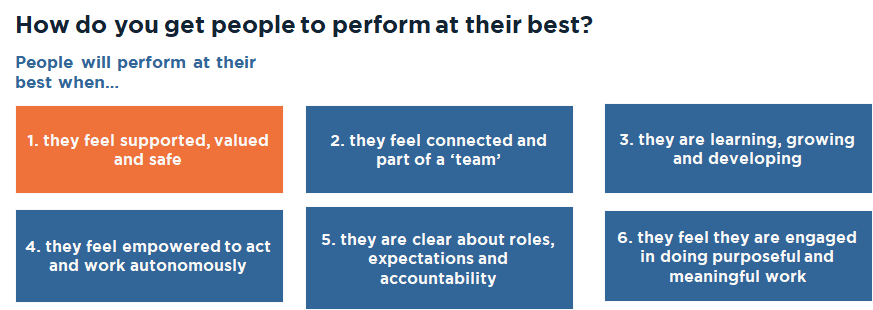
We have previously published a series of practical leadership actions around the themes of people feeling supported, valued and safe; creating a ‘team environment’; supporting learning and growth; empowering staff and building autonomy; ensuring clarity of roles and expectations; and creating meaning and purpose.
We are now going to explore the actionable steps that you can take to enable the suggested strategies and actions. This is one in a series of 31 posts providing specific descriptions of the actions in practice.

So, this post is focusing on theme 1: people feeling supported, valued and safe. In a previous post we have talked through 6 overarching strategies to ensure people feel supported, valued, and safe:
1.1 Communicate openly and authentically.
1.2 Provide direct help and support.
1.3 Actively encourage appropriate behaviours.
1.4 Provide the necessary resources.
1.5 Share information regularly.
1.6 Show appreciation and recognition.
In this post we take a deep dive into the specific strategy of:
1.2 Provide direct help and support.
Tuning in to how people are feeling and some of the challenges they are facing and then providing direct support, signals that you care.
So, here are some of the actions that can be taken to put this leadership strategy into practice:
- Discuss with individuals or the team the roadblocks they confront in achieving their goals, and work with them to explore ways in which to remove, mitigate or manage these barriers. Providing direct help and support does not mean always solving problems for people – trying to be a saviour. Rather, it is about listening and playing a facilitative or coaching role. One-on-one catchups with team members provide a wonderful opportunity for some coachable moments through asking questions that help people to help themselves: What barriers or roadblocks are you facing? How might you remove, lessen, or work around some of these barriers? Is there some direct help you need from me that you are unable to do yourself? Team planning or check-in sessions also provide an opportunity to genuinely acknowledge challenges to success and explore ways to address these challenges – again playing a facilitative role is a helpful way to serve others in the pursuit of their goals.
- “Tune” in to how people are feeling to ensure their wellbeing is not being compromised by work pressures. Help people prioritise their workloads when under pressure. One of the most supportive things a manager can do is to help team members prioritise their work. In the absence of any guidance individuals can easily feel overwhelmed by a seemingly never-ending action list. By simply asking people or listening for people being overwhelmed by workloads, then helping them prioritise their action list – clearing away the ‘noise’ by working through it with them, side by side, to identify critical items and those that can be downgraded, deferred, streamlined, stripped back, or reassigned. This simple helpful act can provide significant relief for people and focus their energy.
- Offer to grab a team member lunch or a coffee when you can see they are working to a deadline. A simple act of kindness that will be greatly appreciated. Be alert to these situations and just do it.
- Encourage flexible hours – tell someone to ‘take the rest of the day off’, give them a ‘sleep in’ pass etc when they meet an important milestone / have been working excessive hours. People resent being taken for granted. While words of appreciation are important and valued, it is also important to find tangible ways to recognise when people have put in extra effort. You can show real thoughtfulness if you are able to link the time-off with something important to people personally, such as time to attend a child’s special event, indulge a hobby or pursuit, visit an ill relative. A simple and meaningful ‘wave of the hand’ costs you nothing, doesn’t involve people having to go through leave processes, and ensures people feel seen, valued, and cared about.
- Direct people to support mechanisms if personal challenges impact their ability to perform. It is important when someone is not performing to expectations not to rush to judgement as to what might be sitting behind the performance shortfall. Ideally you can keep an open mind and discuss such issues with a problem-solving mindset – it could be unclear expectations, insufficient training, misaligned motivations, or personal challenges. There are some areas where managers can address things directly, but others where they are outside their direct control, such as personal issues or challenges. Managers need to recognise such situations and encourage people to access appropriate support mechanisms, such as Employee Assistance Programs, HR support, or peer support programs. People leaders should ideally familiarise themselves with such offerings.
- Protect individuals from unnecessary criticism by senior managers or stakeholders. Recognising that such situations can occur in organisational life, a proactive preventative approach is required. Consider communicating with key people that may interact with your team: We welcome feedback as a learning and improvement opportunity – please make the effort to provide your feedback in a thoughtful manner. If the feedback is serious in nature, please contact me directly as the team leader. You cannot, nor would you want to, shield your staff from external feedback, rather it is about nurturing an environment where feedback can be best heard, and is not hurtful.
Having read this list, some questions you may want to ask yourself might be:
- Are there one or two ideas emerging for me that I might want to put into practice?
- What is the smallest thing I could do that might have a positive impact?
- How will I hold myself accountable for following through on my actions?
Good luck!